




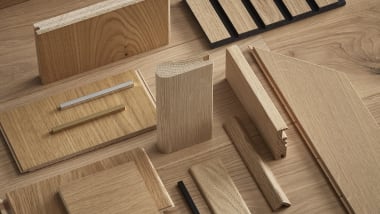


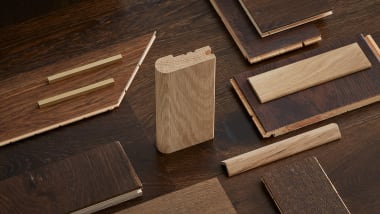


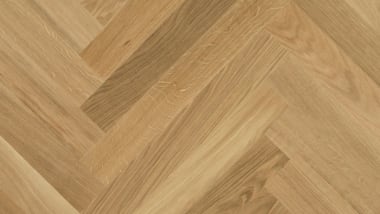
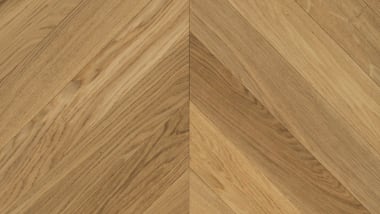

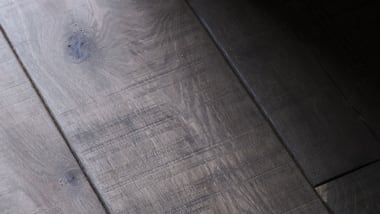


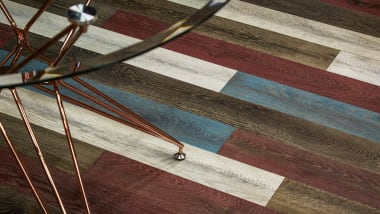


Engineered wood flooring is made from two or more layers of wood, bonded together in a carefully engineered construction to create a more stable flooring material than solid timber.

What is engineered wood flooring?
Premium engineered wood flooring
Chosen as a foundation for a space, engineered wood flooring brings the natural warmth, beauty and texture of real wood to an interior, while providing a long-lasting floor for both contemporary and traditional design schemes.
Are engineered planks made from real wood?
The top layer of an engineered board, known as the lamella, is solid wood, usually hardwood, and may be anything from 2mm to 6mm thick.
The thicker the surface layer, the more times it may be possible to sand and refinish the floor to remove signs of wear, with the thickest wear layers equivalent to those on solid timber boards. The lamella is securely bonded to one or more further layers. This may be multi-layered plywood or a sandwich construction with either a softwood or hardwood core.

Filters
Products (424)


Bestseller
HW12108
Aberdeen
H Collection
Plank | Rustic
1900mm x 190mm x 20mm


HW16601P
Alabastro
Italian Collection
45° Chevron | Prime
610mm x 90mm x 10mm

HW16114
Alabastro
Italian Collection
Plank | Select
1700-2000mm x 190mm x 11mm


HW16404P
Alabastro
Italian Collection
Plank | Prime
800-1400mm x 120mm x 10mm


Bestseller
HW16004P
Alabastro
Italian Collection
Herringbone | Prime
490mm x 70mm x 11mm

HW16854
Alabastro
Boutique
Plank | Select
800-1400mm x 120mm x 9mm


HW3914
Alba
Henley
Plank | Character
2400-3000mm x 200mm x 14mm


HW2130LF
Allevard
Pureplank
Plank | Classic
2200mm x 180mm x 14mm

HW7472
Alpes
Venture Plank
Plank | Character
1750-2350mm x 242mm x 15mm

HW2071LF
Alsace
Pureplank
Plank | Rustic
2200mm x 207mm x 14mm


HW14216
Alsace
V Collection
Plank | Classic
2200mm x 207mm x 14mm


HW2044
Alsace
Pureplank
Herringbone | Rustic
725mm x 130mm x 14mm


HW2208LF
Alsace
Pureplank
Plank | Rustic
1800mm x 180mm x 14mm


Bestseller
HW2022LF
Alsace
Pureplank
45° Chevron | Classic
725mm x 130mm x 14mm


HW2078
Alzon
Pureplank
Plank | Rustic
2200mm x 207mm x 14mm


HW2050
Alzon
Pureplank
Herringbone | Rustic
725mm x 130mm x 14mm
ASK HAVWOODS | ADVICE FROM OUR WOOD EXPERTS
Useful information & common questions about engineered wood flooring
Are there different types of engineered wood flooring?
Engineered wood flooring is available in several different constructions, including multi-layer plywood backing, three-layer construction with a softwood core and balancing veneer, and two-layer construction with individual staves. Engineered boards are also available in a wide range of lengths, widths, shades and finishes, providing hundreds of patterns and constructions to suit different design requirements.
Can engineered wood flooring be used over underfloor heating?
Engineered wood flooring can also be suitable for installation over underfloor heating, which is not the case for solid wood.
What's the difference between engineered timber flooring, laminate and veneer flooring?
Engineered wood flooring should not be confused with laminate or veneer flooring. Laminate uses an image of wood on its surface, while veneer uses a very thin layer of real wood over a core, usually made from a composite wood product such as fibreboard.
Is engineered wood flooring cheaper than solid wood flooring?
Engineered wood flooring is not necessarily cheaper than solid wood flooring. Prices vary depending on the timber species, board dimensions, pattern, construction, surface finish and thickness of the wear layer. Premium engineered wood flooring can be comparable in price to solid wood flooring, particularly when specialist finishes and high-quality materials are used. However, with such a wide variety of constructions, finishes and specifications available, engineered wood flooring offers options across a broad range of price points, making it possible to find a real wood floor to suit different project requirements and budgets.
How long does engineered wood flooring last?
High-quality engineered wood flooring can provide decades of use when correctly installed and maintained. Its lifespan depends on several factors, including the thickness of the hardwood wear layer, the quality of its construction, the surface finish and the level of foot traffic it receives. Regular maintenance and appropriate cleaning helps preserve a wood floor's appearance, while products with thicker wear layers may also be suitable for sanding and refinishing to extend their lifespan.
Can engineered wood flooring be sanded and refinished?
Many engineered wood floors can be sanded and refinished, depending on the thickness of their wood top layer, known as the lamella. Engineered boards typically feature a hardwood wear layer between 2mm and 6mm thick. A thicker lamella generally allows for more opportunities to sand and refinish the surface, helping to remove signs of wear and extend the lifespan of the floor. However, the number of times an engineered floor can be refinished will depend on its individual construction, condition and the manufacturer's recommendations.
Is engineered wood flooring available in wide and long planks?
Engineered wood flooring is available in a wide variety of plank widths and lengths, including larger formats that can be more challenging to achieve with solid timber. The layered construction provides greater dimensional stability, making it possible to create wider and longer boards while reducing the risk of excessive movement. These larger format planks reduce the number of header joints and are particularly popular in contemporary interiors, where longer or wider planks can help create a sense of space.
What is pre-finished engineered wood flooring?
Pre-finished engineered wood flooring has its protective surface treatment applied during manufacturing, rather than after installation. These treatments can include oils, lacquers and other specialist finishes, offering a wide range of colours, textures and appearances. One of the main advantages of pre-finished engineered wood flooring is that the final appearance can be assessed before installation. It also reduces the need for on-site finishing, helping to simplify the installation process and reduce disruption.
Is engineered wood flooring more sustainable than solid wood?
Engineered wood flooring can make more efficient use of hardwood resources than solid wood flooring because only the surface layer needs to be made from wood. The supporting layers can be manufactured using faster-growing softwoods or plywood, reducing the amount of slow-growing hardwood required to produce each board. However, the overall environmental impact of engineered wood flooring depends on factors including timber sourcing, manufacturing processes, product longevity and responsible forest management.
At Havwoods, we have a long-term commitment to sustainability. We do our utmost to ensure that our timber is ethically and sustainably sourced, conducting regular supplier audits to ensure ongoing environmental compliance. We only work with reputable timber companies and have stringent onboarding processes for all suppliers, embedding robust environmental criteria from the outset. We rigorously prioritise and ensure our products and supply chain are supported by the industry’s most respected environmental certifications including the Forest Stewardship Council (FSC®) and the Programme for the Endorsement of Forest Certification (PEFC). For more information, read our latest Net Zero Report.
Why is it important to know the difference between engineered wood flooring and solid wood flooring?
Anthony Scott, our Global Product and Innovation Director provides his expert advice:
"From period properties to contemporary apartments, timber flooring remains a firm favourite among homeowners. While solid wood is associated with traditional craftsmanship, engineered constructions are at the forefront due to their compatibility with modern needs and the demands of busy households. Understanding the practical and technical differences between the two is vital to ensure the correct flooring is chosen for the right setting."


Responsibly sourced timber
We only work with reputable timber suppliers who prioritise sustainable forestry and responsible production.
Reducing our impact
We have a long-term focus on reducing environmental impact across our global operations.
Inspirational wood samples
Choose from hundreds of free luxury wood samples to compare in your own space and lighting.
Our timber experts
Our experienced teams bring together decades of knowledge and exceptional service.

Real projects by inspirational people
Project: The Modern Minimalist Home, Cheshire, England
Designed by actor Chris Bisson as a contemporary family home, this modern new build features our bestselling Relevance50 Chevron and Relevance50 Plank. Together, the two formats create a seamless material palette while responding to the changing character of each space.
Sector: Luxury homes
Compare products and get inspired by our latest WoodBook
Plan your upcoming projects, view our latest pricing and explore our extensive range of wood surfaces in our inspirational WoodBook.
Get our latest WoodBook
